Major County Dog Registration Information
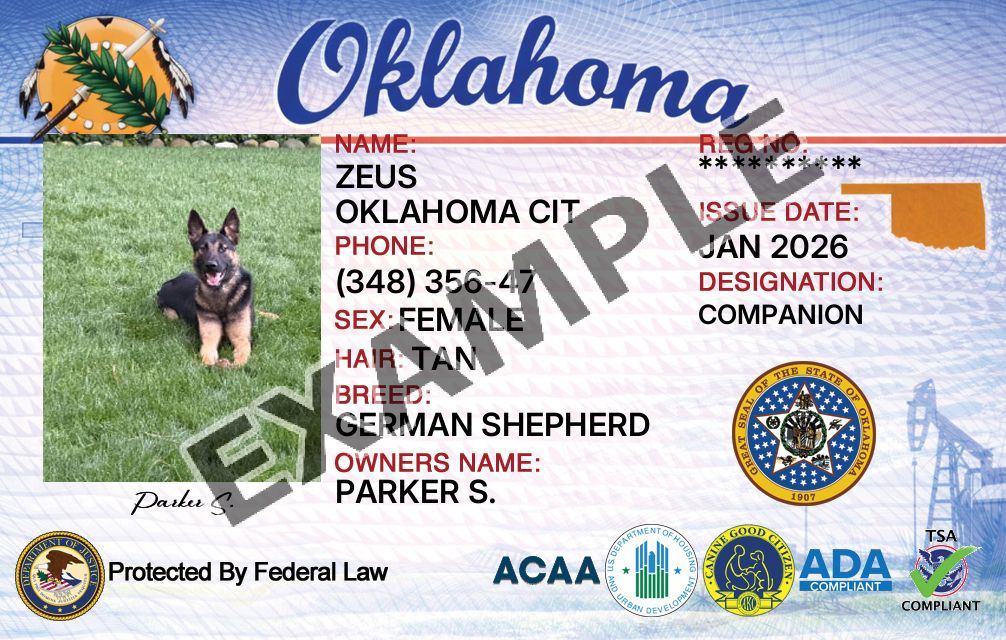
Service Dogs and Emotional Support Animals in Major, Oklahoma
If you’re searching “where do i register my dog in Major County, Oklahoma for my service dog or emotional support dog,” you’re usually dealing with two separate topics: (1) local dog licensing (often tied to rabies vaccination proof and local ordinances) and (2) an animal’s role under disability-related rules (service dog) or housing-related documentation (emotional support animal). Major County residents typically handle dog licensing locally (county and/or city level), while service dog and emotional support animal status is not issued through one universal federal registry.
- Dog licensing is a local process (county and/or city), and it commonly requires proof of current rabies vaccination.
- Service dogs are recognized based on training and disability-related work/tasks—there is no single official federal “service dog registration” you must complete.
- Emotional support animals (ESAs) generally relate to certain housing accommodations and documentation—ESAs are not service dogs and are not handled through a universal government registry.
Where to Register or License Your Dog in Major County, Oklahoma
The offices below are official local government offices that serve Major County residents and are commonly involved in animal-related public services, public health (including rabies-related guidance), and local enforcement questions. If your dog license is handled by a city (for example, if you live inside Fairview city limits or another municipality), these offices can help you confirm the correct licensing path for your address.
Major County Health Department
- Phone: (580) 227-3362
-
Office hours:
Monday–Friday: 8:00 a.m. – 5:00 p.m.Lunch: 12:00 p.m. – 1:00 p.m.Closed weekends and state holidays
Major County Sheriff’s Office (Administrative Office)
- Phone: (580) 227-4471
-
Administration hours:
Monday–Friday: 8:30 a.m. – 4:30 p.m.Dispatch: 24/7
Major County Administrative Offices (Courthouse / County Offices)
- Phone: (580) 227-4732
- This contact line is published for Major County administrative offices and can help direct you to the appropriate county department if you’re unsure where animal control dog license questions are handled for your address.
Major County Clerk (Department Contact)
- Office phone: (580) 227-4732
-
Hours of operation:
8:30 a.m. – 4:30 p.m. (unless otherwise posted)
- Note: If your question is specifically “where do I register a dog in Major County, Oklahoma,” the County Clerk can help route you to the correct county office if the licensing function is handled elsewhere.
Overview of Dog Licensing in Major County, Oklahoma
What “dog licensing” usually means locally
A dog license (sometimes called a “dog tag” license) is a local registration that connects a dog to an owner and typically confirms the dog has current rabies vaccination documentation. Depending on where you live in Major County, Oklahoma (inside a municipality versus unincorporated county areas), licensing may be handled by a city office or coordinated through local county offices and enforcement.
Why rabies documentation matters
Even when a local office does not “license” dogs in the same way every year, many local ordinances and enforcement practices revolve around having proof of current rabies vaccination and keeping identification on the dog (tag and/or collar). If you’re asking about an “animal control dog license in Major County, Oklahoma,” rabies vaccination paperwork is typically the first item officials ask about.
What You Need Before Registering a Dog
Common documents and details to gather
Requirements can vary by town and by the office that issues the license, but most local dog licensing requirements in Major County, Oklahoma will ask you for some combination of the following items:
- Rabies vaccination certificate (current and issued by a licensed veterinarian)
- Description of the dog (name, age, breed or mix, color/markings)
- Owner identification (and sometimes proof of residency/address)
- Spay/neuter documentation (if your local fee structure uses altered vs. unaltered pricing)
- Payment method for licensing fees (if applicable)
If your dog is a service dog or emotional support animal
Service dog status and emotional support animal status do not replace local licensing. In most situations, a dog that is a service dog or an ESA still needs to follow the same local public health and animal control rules that apply to other dogs (for example, rabies vaccination rules, leash rules, and local licensing rules), unless a specific local exemption applies.
Steps to Register or License a Dog in Major County, Oklahoma
Step 1: Confirm whether your city or the county handles licensing
Start by confirming where your dog license is issued for your address:
- Inside city limits: you may need to license your dog through a city office (commonly a city clerk, police department, or animal control contact).
- Outside city limits (unincorporated areas): county-level guidance and enforcement may apply, and you may be directed to the appropriate county office to confirm any licensing/tag requirements.
Step 2: Gather rabies proof and any required documentation
Bring a current rabies vaccination certificate and any other documentation your local office requires (ID, proof of residency, spay/neuter proof if relevant). If your rabies certificate is expired or you’re not sure, address that first—many licensing systems are built around current rabies vaccination status.
Step 3: Apply, pay fees (if required), and obtain any tags
If your jurisdiction issues a dog license tag, keep the receipt and attach tags according to local rules (usually on the collar). If your jurisdiction does not issue an annual “license,” ask what proof is expected during an animal control contact (rabies certificate, tag, or other identification).
Step 4: Keep copies for housing, travel, and veterinary records
Keep digital and paper copies of rabies records and any license receipt. This can help with boarding, grooming, moving between cities, and resolving lost-dog situations faster.
Service Dog Laws in Major County, Oklahoma
No universal federal “service dog registry”
In the U.S., service dogs are generally recognized based on the dog being individually trained to do work or perform tasks for a person with a disability. There is not one official federal government registry that you must use to “register” a service dog. This is one reason local dog licensing (a public health/animal control function) is different from service dog legal status (a disability access concept).
How service dogs interact with local licensing
A service dog still typically must follow the same local animal rules that apply to other dogs in Major County, Oklahoma—such as rabies vaccination compliance and local dog license requirements (if your city or county requires it). If you are asked about a dog license in Major County, Oklahoma, service dog training does not automatically remove the need for local licensing or vaccination documentation.
Emotional Support Animal Rules in Major County, Oklahoma
ESAs are not the same as service dogs
Emotional support animals provide comfort by their presence, but they are not the same as service dogs trained to perform specific work or tasks. ESA status commonly comes up in housing contexts where certain accommodations may apply, based on appropriate documentation.
ESAs and local dog licensing
Even if a dog is an emotional support animal, local dog licensing requirements in Major County, Oklahoma (and within city limits where applicable) can still apply. Put simply: ESA documentation for housing does not function as a substitute for a rabies certificate or a local dog license if your jurisdiction requires one.
Dog License vs. Service Dog vs. Emotional Support Animal (ESA)
The comparison below helps clarify what each term typically means when you’re asking where to register a dog in Major County, Oklahoma—especially for a service dog or emotional support dog.
| Category | What it is | Who issues/controls it | What you typically need |
|---|---|---|---|
| Dog License (Local) | A local registration/permit process that may include a tag and is often tied to rabies vaccination compliance. | City or county government (varies by your address within Major County, Oklahoma). | Usually proof of current rabies vaccination; sometimes proof of residency, ID, spay/neuter documentation, and a fee. |
| Service Dog (Legal Status) | A dog individually trained to do work or perform tasks for a person with a disability. | Recognized under disability-access rules; not created by a single universal “registry.” | The dog’s training and behavior in public; local rules like vaccination and licensing can still apply. |
| Emotional Support Animal (ESA) | An animal that provides emotional support/comfort; typically relevant to certain housing accommodation processes. | Not a single government registry; commonly handled through housing accommodation documentation processes. | Documentation used for housing requests (as applicable) plus local compliance like rabies vaccination and any required licensing. |
Frequently Asked Questions
Do I need to register a service dog in Major County, Oklahoma?
There is no single universal federal “service dog registration” requirement. However, your dog may still need to comply with local rules such as rabies vaccination proof and any dog license requirement that applies where you live in Major County, Oklahoma (especially if you live inside a city’s limits).
Do I need a dog license in Major County, Oklahoma if my dog is an emotional support animal?
ESA status does not automatically replace local dog licensing requirements. If your city or local jurisdiction requires a dog license, your ESA generally still needs to be licensed and have current rabies documentation.
Which office should I call first if I’m not sure who issues dog licenses?
If you’re unsure whether your city or the county handles dog licensing, start with the Major County administrative offices phone line or the Sheriff’s Office administrative line to confirm which local authority handles animal control and dog license questions for your address. If your question involves rabies documentation or public health guidance, the Major County Health Department is a strong starting point.
What’s the difference between a rabies tag and a dog license tag?
A rabies tag typically indicates a dog has been vaccinated for rabies (issued in connection with vaccination). A dog license tag is a local government licensing identifier (issued by the city/county if they license dogs). Some areas use both, and some may treat proof of rabies vaccination as the key compliance item.
If I move within Major County, do I need to re-license my dog?
Possibly. Moving from unincorporated areas into a city (or from one municipality to another) can change which rules apply. If you change addresses, it’s smart to confirm dog licensing requirements in Major County, Oklahoma for your new address and update your records.
Register A Dog In Other Oklahoma Counties
Select your county below to get started with your dog’s ID card. Requirements and license designs may vary by county, so choose your location to see the correct options and complete your pup’s registration.
- Adair County Dog Registration
- Alfalfa County Dog Registration
- Atoka County Dog Registration
- Beaver County Dog Registration
- Beckham County Dog Registration
- Blaine County Dog Registration
- Bryan County Dog Registration
- Caddo County Dog Registration
- Canadian County Dog Registration
- Carter County Dog Registration
- Cherokee County Dog Registration
- Choctaw County Dog Registration
- Cimarron County Dog Registration
- Cleveland County Dog Registration
- Coal County Dog Registration
- Comanche County Dog Registration
- Cotton County Dog Registration
- Craig County Dog Registration
- Creek County Dog Registration
- Custer County Dog Registration
- Delaware County Dog Registration
- Dewey County Dog Registration
- Ellis County Dog Registration
- Garfield County Dog Registration
- Garvin County Dog Registration
- Grady County Dog Registration
- Grant County Dog Registration
- Greer County Dog Registration
- Harmon County Dog Registration
- Harper County Dog Registration
- Haskell County Dog Registration
- Hughes County Dog Registration
- Jackson County Dog Registration
- Jefferson County Dog Registration
- Johnston County Dog Registration
- Kay County Dog Registration
- Kingfisher County Dog Registration
- Kiowa County Dog Registration
- Latimer County Dog Registration
- LeFlore County Dog Registration
- Lincoln County Dog Registration
- Logan County Dog Registration
- Love County Dog Registration
- Marshall County Dog Registration
- Mayes County Dog Registration
- McClain County Dog Registration
- McCurtain County Dog Registration
- McIntosh County Dog Registration
- Murray County Dog Registration
- Muskogee County Dog Registration
- Noble County Dog Registration
- Nowata County Dog Registration
- Okfuskee County Dog Registration
- Oklahoma County Dog Registration
- Okmulgee County Dog Registration
- Osage County Dog Registration
- Ottawa County Dog Registration
- Pawnee County Dog Registration
- Payne County Dog Registration
- Pittsburg County Dog Registration
- Pontotoc County Dog Registration
- Pottawatomie County Dog Registration
- Pushmataha County Dog Registration
- Roger Mills County Dog Registration
- Rogers County Dog Registration
- Seminole County Dog Registration
- Sequoyah County Dog Registration
- Stephens County Dog Registration
- Texas County Dog Registration
- Tillman County Dog Registration
- Wagoner County Dog Registration
- Washington County Dog Registration
- Washita County Dog Registration
- Woods County Dog Registration
- Woodward County Dog Registration